 Skip to content

Your Goldendoodle is more than a pet; they’re a fluffy, four-legged member of the family. Hearing the word “cancer” associated with this beloved breed can be frightening, but this guide is here to transform that fear into confident action. Your calm, watchful eye is the most powerful tool you have. Veterinarians agree that early detection is key to better health outcomes, and that process begins at home with you.
Empowerment, not panic, is the goal. A Goldendoodle’s health profile is inherited from both parent breeds, and Golden Retrievers unfortunately have one of the highest cancer rates in the canine world. This doesn’t guarantee your dog will face the disease, but it makes being proactive essential. Understanding the specific warning signs, common cancers, and your role as your dog’s advocate is the most powerful step you can take.
Are Goldendoodles Prone to Cancer? Unpacking the Genetic Truth
A Goldendoodle’s cancer risk lies in its family tree. Think of their genetics as a deck of cards, with half coming from a Golden Retriever and half from a Poodle. This unique combination creates a specific set of health considerations every owner should understand.
The most significant factor comes from the Golden Retriever lineage. They are particularly susceptible to two aggressive forms: hemangiosarcoma, a fast-growing cancer of the blood vessels, and lymphoma, a cancer of the body’s infection-fighting cells. Inheriting this predisposition doesn’t guarantee a problem, but it does raise the stakes.
On the other side, Poodles generally have a lower overall cancer rate than Golden Retrievers. While they can be prone to certain types of oral tumors, they don’t carry the same high-level risks. Your Goldendoodle’s health is a blend of these two genetic stories—the high-risk profile of the Golden Retriever and the more moderate one of the Poodle.
This “higher risk” simply means you have a powerful reason to be an extra-vigilant owner. By understanding the risks and knowing what to look for, you can partner with your veterinarian to catch any potential issues as early as possible.
The 10 Subtle Signs of Cancer in Your Goldendoodle
The most powerful diagnostic tool you have is your deep knowledge of your own dog. You know their quirks, energy levels, and daily routines better than anyone. Cancer often reveals itself through small changes to this normal pattern. While an obvious lump is a clear signal, many early signs are more subtle. Veterinarians recommend watching for the following 10 symptoms:
- Lumps and Bumps: Any new lump or a bump that changes in size or shape.
- Sores That Don’t Heal: Persistent sores or skin infections.
- Unexplained Weight Loss: Your dog is losing weight despite a normal appetite.
- Loss of Appetite: A sudden disinterest in food or difficulty eating.
- Offensive Odor: A strong, unusual smell from the mouth, ears, or elsewhere.
- Bleeding or Discharge: Any abnormal fluid from any opening.
- Persistent Lameness: Limping or stiffness that doesn’t go away.
- Difficulty Breathing, Urinating, or Defecating: Straining or obvious discomfort.
- Low Energy (Lethargy): A noticeable drop in your dog’s usual enthusiasm.
- Difficulty Eating or Swallowing: Dropping food, coughing, or gagging during meals.
If you notice any of these signs, don’t panic or try to diagnose the issue yourself. Your only job is to observe and report. Call your veterinarian to schedule an appointment. Describing what you’ve seen gives them crucial information to determine the next steps.
How to Perform a Monthly At-Home Health Check
Actively looking for changes is even more powerful than just knowing the signs. You can transform this task from a source of anxiety into a monthly bonding ritual. The goal of this at-home checkup isn’t to find cancer; it’s to become so familiar with your dog’s body that you can spot any new changes right away.
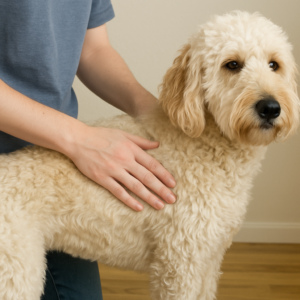
Once a month, when your Goldendoodle is calm, gently run your hands over their entire body. Start with their head and ears, feeling under their chin and down their neck. Move across their shoulders, chest, and rib cage, then along their back and belly. Check each leg down to the pads of their paws. Part their curly coat so you can feel the skin beneath. This head-to-tail check should feel like a soothing massage.
As you perform this check, you’re feeling for anything that seems different from last month, including new lumps, sores, or tender spots. Your only job is to notice a change, not diagnose it. Many bumps are harmless, but only a vet can make that determination.
“I Found a Lump on My Goldendoodle. Now What?”
Finding a new bump on your dog can cause a jolt of panic. Before you let your mind race, take a deep breath and call your veterinarian. While the temptation to “wait and see” is strong, immediate action is the most powerful tool you have.
Many lumps found on dogs are benign, meaning they are not cancerous. The most common culprit is a lipoma, a harmless fatty tumor. These feel like soft, squishy, movable bumps under the skin and pose no threat to your dog’s health.
To determine what the lump is, your veterinarian will likely perform a fine-needle aspirate (FNA). This is a simple and quick procedure where the vet uses a tiny needle to collect cells from the lump for examination under a microscope. Most dogs tolerate this well, often without flinching.
This straightforward test is the critical first step toward getting a clear answer. It allows your vet to distinguish between harmless bumps and something that requires more attention. If it is concerning, you’ve just given your dog the best possible head start.
The 3 Most Common Cancers in Goldendoodles
While many lumps are harmless, it’s wise to know about the specific cancers seen in Goldendoodles, especially those passed down from their parent breeds.
Two of the most significant cancers are inherited from the Golden Retriever line. Lymphoma is a cancer of the immune system, often first noticed as swollen glands (lymph nodes) under the jaw or behind the knee. When caught early, treatment can significantly extend a dog’s life with good quality. In contrast, the aggressive hemangiosarcoma is a silent cancer of the blood vessels. Its signs are often behavioral—sudden lethargy, weakness, or pale gums—making it critical to report any abrupt change in your dog’s energy to your vet.
Mast Cell Tumors are a major concern for lumps you can feel. These skin cancers are masters of disguise, appearing as anything from a small bump to an itchy, reddish sore. Because they can mimic other issues like bug bites or allergies, this reinforces the golden rule: any new or changing spot on your dog’s skin warrants a vet visit.
Cancer Treatment Options: A Simple Overview
Hearing that your dog has cancer is overwhelming, but understanding the next steps can restore a sense of control. Treatment options generally fall into three main categories and are chosen to prioritize your dog’s quality of life.
- Surgery: For solid tumors, like many Mast Cell Tumors, the goal is to physically remove all cancerous cells.
- Radiation: If a tumor can’t be removed completely, highly focused energy beams can be used to shrink or destroy the remaining cancer cells.
- Chemotherapy: For cancers that affect the whole body, like lymphoma, chemotherapy is used. In dogs, the goal is often to achieve remission and provide more high-quality time with fewer side effects than in human treatment.
You won’t have to navigate these decisions alone. Your primary veterinarian may refer you to a Veterinary Oncologist—a vet who specializes in cancer. This expert will help you weigh the options, considering the medical, financial, and emotional realities of the journey ahead.
You Are Your Dog’s Best Advocate: A Final Action Plan
A cancer diagnosis carries both emotional and practical weight. The cost of canine cancer treatment can be significant, so it is essential to have a frank conversation with your veterinarian about these realities to create a sustainable and compassionate plan.
Ultimately, every decision comes back to one central question: what is your dog’s quality of life? Focusing on giving them “more good days” rather than just “more days” can be a powerful guiding principle. This focus on comfort is often called palliative or hospice care. It isn’t about “giving up,” but shifting the goal to aggressively managing symptoms and maximizing happiness with pain medication, appetite stimulants, and other supportive therapies.
Your most important work happens in the quiet moments—learning your dog’s unique “normal.” Commit to a monthly, head-to-tail check, turning a petting session into a wellness scan. If anything seems different, you now know to partner with your veterinarian immediately.
Your daily observation is the most sensitive health monitor your dog will ever have. When you combine that personal knowledge with your vet’s expertise, you create the strongest possible defense against disease.


