 Skip to content
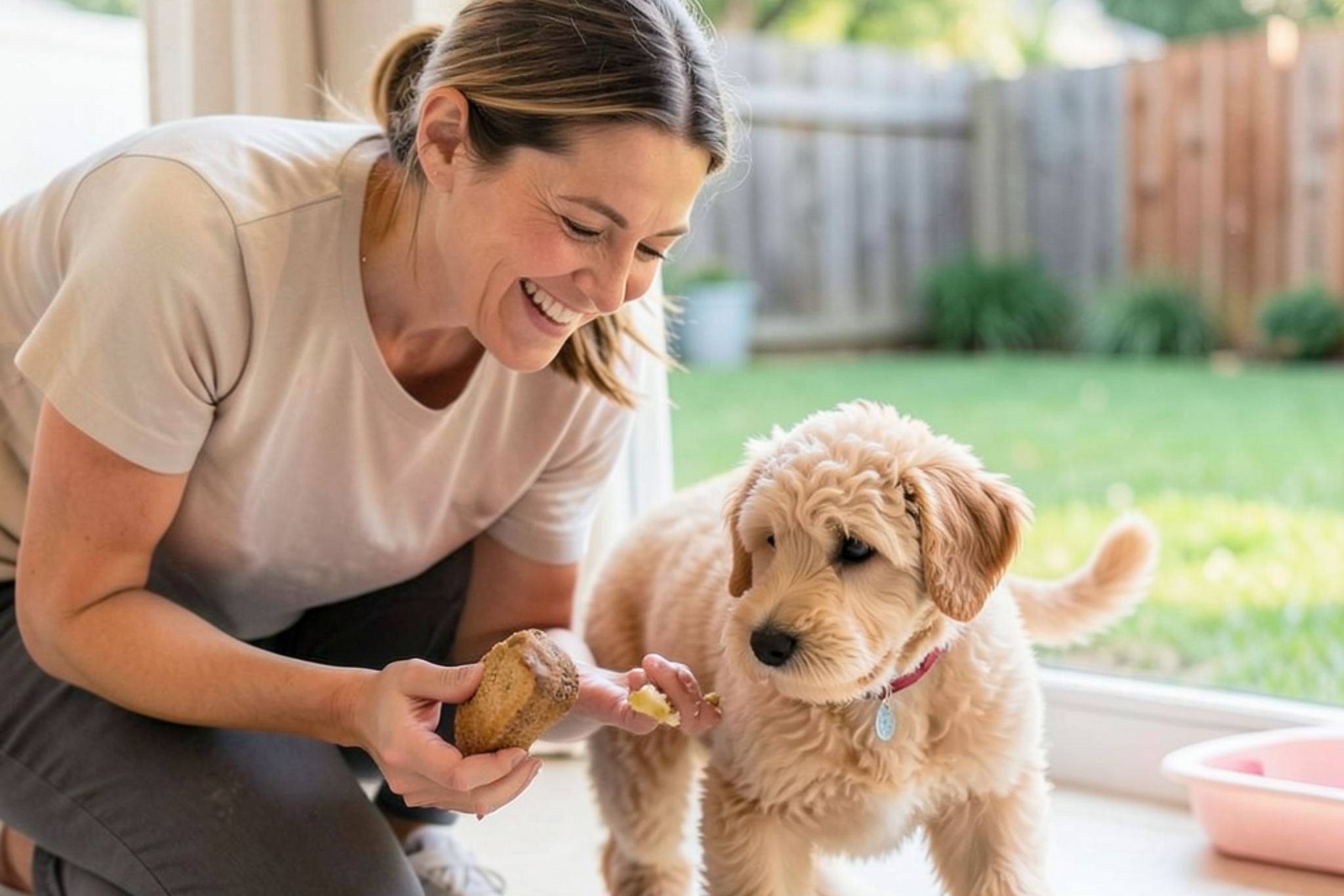
Congratulations on your new Goldendoodle! You’re likely falling in love with that fluffy face, but if you’re also getting tired of surprise puddles on your floor, you’re in the right place. That frustration is completely normal, and the solution isn’t about scolding or complex commands; it’s about clear communication with your eager-to-please puppy.
Potty training is a partnership. Your incredibly smart Goldendoodle is wired to learn the rules of their new home; your job is to make those rules obvious and rewarding. True success rests on three foundational pillars: Schedule, Supervision, and Reward. A predictable Schedule teaches your puppy when to expect a bathroom break. Close Supervision prevents accidents before they happen. And a fantastic Reward makes going outside the most exciting choice they can make.
Whether you’re just starting your 8 week old Goldendoodle puppy training or troubleshooting issues a few weeks in, this framework is your roadmap. These simple, manageable steps will build a bond of trust and lead to a clean, happy home for you and your new best friend.
Why Your Smart Goldendoodle Isn’t ‘Getting It’ (Yet!)
If you’re feeling frustrated, wondering why your brilliant Goldendoodle is still having accidents, take a deep breath. The issue isn’t a lack of intelligence—it’s a matter of biology. Your puppy’s bladder is like a tiny water balloon; it fills up quickly, and the muscles needed to control it are still developing. An 8-week-old Goldendoodle puppy isn’t choosing to pee on the rug; they simply don’t have the physical ability to hold it for long.
A helpful guideline is the “Months + 1 Hour” rule. A puppy can generally hold their bladder for the number of months they are old, plus one. For a two-month-old (8-week-old) puppy, the absolute maximum you can expect is about three hours. This timeframe shrinks when they are active, playing, or have just eaten or woken up. This rule is key to creating a schedule that works with their body, not against it.
This is where your Goldendoodle’s intelligence becomes so important. They are fast learners, which is a double-edged sword. Just as quickly as they learn that going outside earns a treat, they can learn that the corner of the dining room is an acceptable indoor bathroom. Your consistency is non-negotiable from day one. By creating a predictable routine, you’re channeling their smarts toward the habits you want.
The 5 Must-Have Supplies for Potty Training Success
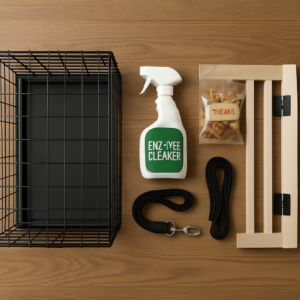
To put a consistent routine into practice, you’ll need a few key tools. Having the right gear on hand makes the process smoother and creates an environment where it’s easy for your Goldendoodle to succeed. Here’s your essential shopping list:
- A properly-sized crate for effective crate training
- Baby gates or a puppy playpen to limit access
- An enzyme cleaner
- High-value training treats
- A standard leash and collar/harness
Pay close attention to the cleaner. When accidents happen (and they will!), regular soaps won’t cut it. While they might remove the stain for you, your puppy’s powerful nose can still detect leftover scent molecules, which act like a neon sign saying, “This is a good potty spot!” An enzyme cleaner releases special proteins that destroy the odor-causing matter completely. For truly effective cleaning of dog urine from carpet, this is non-negotiable.
Likewise, not all rewards are created equal. For a task this important, you need high-value treats. This doesn’t mean expensive, but something your puppy finds irresistible and only gets for potty success. Think tiny, pea-sized pieces of boiled chicken, freeze-dried liver, or special soft training treats—not their everyday kibble. This makes the reward feel like a jackpot, which is the secret to finding the best potty training treats for dogs and motivating them to repeat the behavior.
The Ultimate Goldendoodle Potty Training Schedule
The single most important part of this process is a proactive schedule. Instead of waiting for a puddle, your goal is to take your puppy outside so frequently that they don’t get a chance to have an accident inside. This proactive approach builds a strong foundation by teaching them exactly where you want them to go from the very beginning.
Your puppy’s day is more predictable than you think. There are five critical moments when they will almost certainly need a potty break: right after waking up, after every meal, after active playtime, and one last time before bed. Here is a sample puppy potty training chart you can adapt, perfect for starting 8 week old goldendoodle puppy training:
- 7:00 AM: Wake up & immediate potty break
- 7:15 AM: Breakfast, then another potty break
- ~Every 60-90 minutes: Potty break during supervised playtime
- After each nap: Immediate potty break
- 5:00 PM: Dinner, then another potty break
- 10:00 PM: Final potty break before crating for the night
Consistency is the engine that makes this schedule work. When everyone in the home is on the same page, your Goldendoodle quickly learns to expect these breaks and begins developing the muscle control to hold it between trips. During those supervised hours, or when you can’t watch them every second, the crate becomes your best friend.
How to Crate Train Your Goldendoodle Without the Guilt
For many new owners, the idea of putting a puppy in a crate can bring on a wave of guilt. But the secret is to reframe your thinking: a crate isn’t a cage, it’s your puppy’s first bedroom. This approach taps into their natural denning instinct, a powerful behavior where dogs instinctively avoid soiling their sleeping space. By making the crate a safe and cozy den, you’re not punishing them; you’re working with their nature.
To build this positive connection, the crate must always be a happy place. Start by turning it into a game. With the door open, toss high-value treats inside and praise your puppy enthusiastically when they go in. Once they are comfortable, begin feeding their meals in the crate. This simple routine quickly teaches your smart goldendoodle puppy that their den is where the best things—like food and praise—happen.
Once your puppy views the crate as their sanctuary, their denning instinct becomes your potty-training superpower. They will naturally try to “hold it” to keep their den clean, which is invaluable for preventing messes overnight or when you can’t supervise them. A whine from the crate is no longer a guess—it’s a clear signal that your puppy genuinely needs a potty break. This is one of the most effective mini goldendoodle potty training tips for new owners.
The 3-Step Routine for a Perfect Potty Break
Every trip outside is a golden opportunity for learning. Instead of wandering your yard and hoping for the best, you can turn each potty break into a clear, three-step lesson that your smart Goldendoodle will pick up on quickly. This routine transforms confusion into communication.
First, establish a designated potty spot. Always take your puppy on a leash directly to this same area. This consistency minimizes distractions and signals that it’s time for business, not play. As they begin to pee or poop, calmly say your chosen verbal cue, like “Go Potty.” This is a core part of how to potty train a goldendoodle puppy, as it attaches a command to the physical act.
The instant your puppy finishes, celebrate! The secret to positive reinforcement for puppy training is immediate feedback. You have only one or two seconds to give an enthusiastic “Yes!” and a delicious reward. The best potty training treats for dogs are small, smelly, and special—saved only for these moments. If you wait until you’re back inside, your puppy will think they’re being rewarded for coming through the door.
Following this routine will drastically reduce indoor messes. Of course, even with a perfect plan, accidents are an inevitable part of the process. Knowing how to react in that moment is critical.
What to Do When Accidents Happen (And What You Must NEVER Do)
It’s tempting to scold your puppy when you discover a puddle, but this is the single biggest mistake you can make. Never punish a puppy for an accident by yelling or rubbing their nose in it. This doesn’t teach them where to go; it only teaches them that you are scary and unpredictable. This fear can be a major reason why is my goldendoodle having accidents in hidden places—they learn to be afraid of eliminating in front of you, even outside. True positive reinforcement for puppy training means building trust, not fear.
If you catch your puppy mid-accident, your goal is to interrupt, not terrify. Make a sharp, surprising sound—like a quick clap or an “Ah-ah!”—just enough to get their attention. Then, immediately scoop them up and rush them to their designated potty spot outside. If they finish there, praise them enthusiastically. You’re not punishing the mistake; you’re redirecting them to the right choice.
After dealing with your puppy, cleaning correctly is your secret weapon against repeat offenses. A puppy’s powerful nose will draw them back to any spot that smells like a previous accident. For cleaning dog urine from carpet or hard floors, regular soap isn’t enough. You must use an enzyme cleaner. This formula breaks down and destroys the odor-causing proteins, completely removing the invisible “bathroom here!” sign.
Bell Training vs. Crate Training: Which is Best for Your Doodle?
New owners often debate crate training vs bell training for puppies, but this is a misunderstanding. They aren’t competing methods; they serve two different, complementary purposes. Crate training is your management tool—a safe “den” that uses natural instincts to prevent accidents when you can’t supervise. Bell training, on the other hand, is a communication tool that gives your puppy a voice to tell you, “I have to go out!”
The best strategy is to use them together. The crate is perfect for preventing messes overnight and when you can’t have your eyes on your puppy. The bells empower your puppy to actively participate in their training during the day, ending the frustrating guesswork of trying to interpret every whine and sniff.
A clever goldendoodle puppy can be a star student with bells, but their intelligence is a double-edged sword:
- Pro: It gives your puppy a clear, consistent way to communicate their need to go potty.
- Con: Smart Doodles can quickly learn to ring the bell just to go outside and play!
If you’re ready to trade guesswork for a clear signal, teaching your puppy to use bells is a fantastic next step.

How to Bell Train Your Goldendoodle in 5 Simple Steps
Teaching your clever Doodle to become a bell-ringing communicator is a fun game using positive reinforcement for puppy training. This process works wonders for all Doodles, making it one of the most effective mini goldendoodle potty training tips. Instead of just hanging the bells and hoping for the best, this step-by-step method builds a clear connection in your puppy’s mind.
Your goal is to teach your puppy that ringing the bell makes the “potty door” open. Here is how to bell train a puppy step by step:
- Introduce the Bells: Let your puppy sniff the bells. The moment their nose touches them, say “Yes!” and give them a high-value treat. Repeat until they understand that touching the bells gets a reward.
- Teach the “Touch”: Hold the bells a tiny distance away. Say “Touch” and reward them for moving to touch it. You’re teaching a command that makes the bell ring.
- Associate with the Door: Hang the bells on the doorknob of the designated potty door. Repeat the “touch” game in this new spot.
- Prompt Before Every Potty Break: This is critical. Every single time you take your puppy out, gently guide their paw or nose to ring the bell first. As soon as it jingles, open the door and praise them.
- Reward Independent Rings: Eventually, your puppy will ring the bell on their own. When they do, act immediately! Open the door and take them out. The ultimate reward is a successful potty trip outside, followed by lots of praise.
It’s important to phase out treats for just ringing the bell. Soon, the reward isn’t the snack but the door opening and praise after they successfully potty outside. This prevents them from ringing the bell just to play.
Help! My Potty-Trained Goldendoodle Started Having Accidents Again
Just when you thought you’d crossed the potty training finish line, you start finding puddles again. It’s frustrating, but this is likely potty training regression, and it’s a completely normal phase. Often happening around 4 to 8 months, this is your puppy’s version of a rebellious teenager testing boundaries. They get more interested in exploring and can “forget” their training. The answer to why is my goldendoodle having accidents at this stage is rarely defiance; it’s usually just a developmental hiccup.
The key to fixing this is not punishment but a temporary “Back to Basics” boot camp. For one to two weeks, revert to the strict schedule you used at the very beginning. This means more frequent leashed potty breaks, especially after waking up and playing. Keep your puppy tethered to you or in their crate when you can’t supervise them directly, and reward every successful outdoor trip with over-the-top praise and a high-value treat. You are simply reminding them of the rules in a positive, reinforcing way.
This reset reinforces good habits and helps you get back on track quickly. While most puppies are reliably trained by their first birthday, remember at what age are goldendoodles fully potty trained can vary. Consistency is your best tool for navigating these bumps in the road.
Is It an Accident or Something Else? Tackling Submissive and Excitement Urination
If your Goldendoodle leaves a puddle every time the doorbell rings or you walk through the door, you’re likely dealing with something other than a training lapse. This isn’t defiance; it’s often either excitement urination or submissive urination. Excitement urination is exactly what it sounds like—your happy puppy’s bladder can’t contain their joy. Submissive urination is a behavioral signal, often accompanied by a tucked tail or rolling over, that says, “I’m small and not a threat.”
Crucially, neither of these is a conscious choice, which is a key part of understanding why is my goldendoodle having accidents in these moments. It’s an uncontrollable reflex, like a person blushing. Because your puppy can’t help it, punishing them will only create fear and anxiety. This is especially true for submissive peeing, as scolding will make your puppy feel an even greater need to show submission, leading to more urination.
The best approach for managing excitement urination is to lower the energy during greetings. When you come home, ignore your puppy for the first minute or two until they calm down, then greet them quietly. Ask guests to do the same. Taking them out for a potty break right before visitors arrive can also help.
For stopping puppy submissive urination, the goal is to build confidence. Avoid looming over them or making direct eye contact; instead, crouch down to their level. This simple change in body language makes you appear less intimidating. Fun, positive puppy training sessions that reward them for simple commands like “sit” also do wonders for their self-esteem. Most puppies outgrow these behaviors as they mature.
Goldendoodle Potty Training FAQ: Your Biggest Questions Answered
Navigating the world of potty training brings up a lot of questions. Here are clear, straightforward answers to the most common concerns Goldendoodle owners face.
How long does it really take to housebreak a Goldendoodle?
Every puppy learns at a different pace, but a realistic timeline for how long to housebreak a goldendoodle is typically 4 to 6 months. This doesn’t mean you’ll have daily accidents for half a year! With a consistent schedule, you’ll see dramatic improvement quickly, but achieving full, accident-free reliability takes time.
At what age are Goldendoodles considered fully potty trained?
Most vets and trainers agree that at what age are goldendoodles fully potty trained is usually between 6 and 12 months. “Fully trained” means your puppy reliably holds it for reasonable periods, signals when they need to go out, and has gone several weeks without an indoor accident.
Do I need to do anything different for a Mini Goldendoodle?
Yes! One of the most important mini goldendoodle potty training tips is to remember their smaller size means a smaller bladder. While a standard puppy might follow the “months plus one” hour rule, your mini will need more frequent potty breaks, especially when awake and active.
What is the ‘umbilical cord training’ method?
This is a game-changer for preventing accidents. The umbilical cord training method is a supervision technique where you use a lightweight leash to keep your puppy physically tethered to you inside the house. This makes it impossible for them to wander off for a secret accident and helps you instantly learn their subtle pre-potty signals.
Your Journey to a Confident, Potty-Trained Goldendoodle
Just a short while ago, every unexpected puddle may have felt like a step backward. Now, you understand the “why” behind your puppy’s behavior and are equipped with a clear, effective plan. You’re no longer just reacting to accidents; you’re proactively teaching your Goldendoodle and turning frustration into focused action.
This entire journey hinges on three powerful pillars: unwavering Consistency in your schedule, deep Patience with the process, and relentless Positivity in your rewards. This is the heart of positive dog training. Every scheduled potty break and every cheerful celebration for a job well done isn’t just about training; it’s about building a language of trust and communication with your new family member.
The puddles on the floor won’t last forever, but the bond you forge through this patient goldendoodle puppy training absolutely will. Keep celebrating the small wins. Soon you’ll have more than just a house-trained dog—you’ll have a loyal companion who sees you as their trusted, confident leader.


