 Skip to content
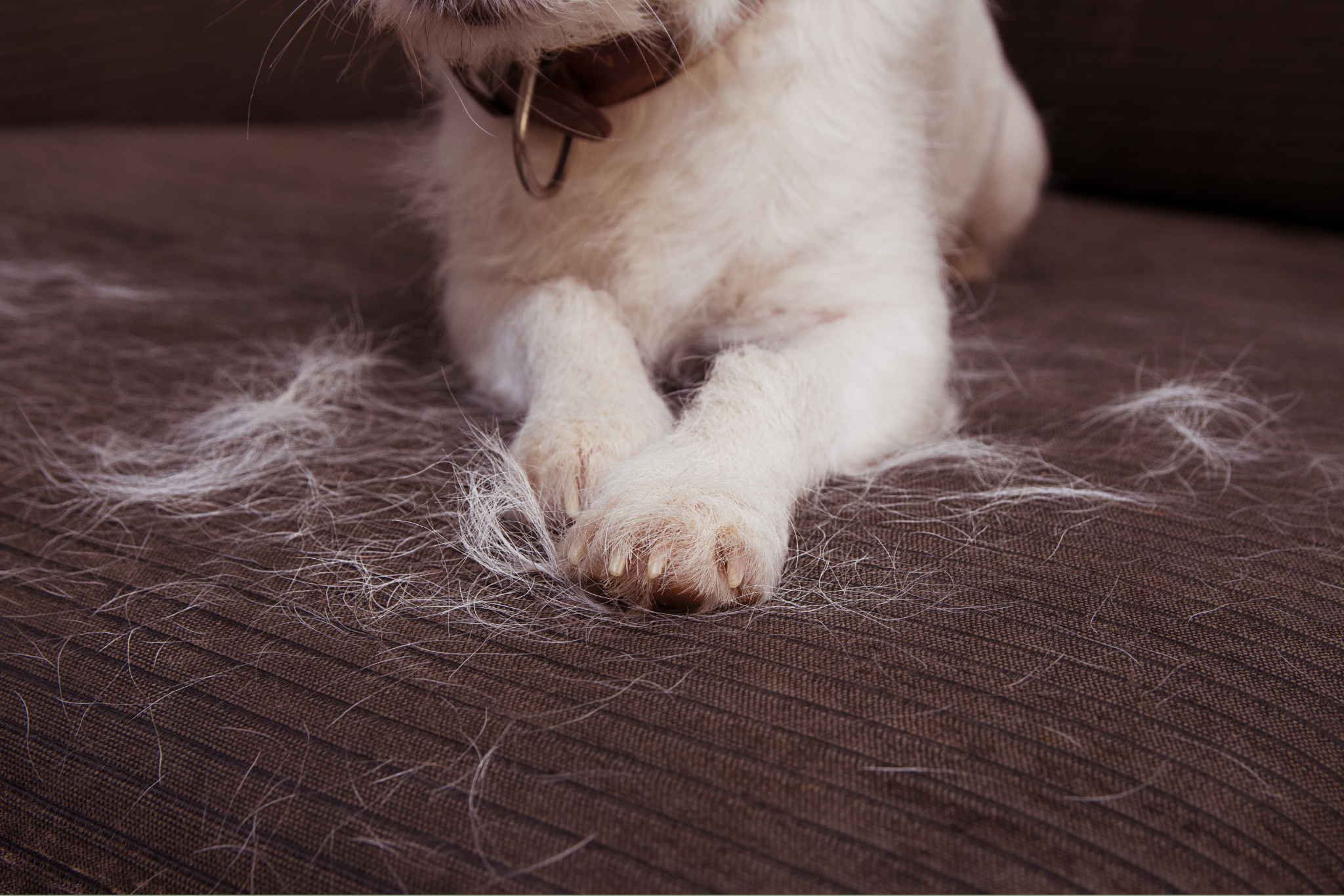
You’ve heard the rumor: Goldendoodles don’t shed. It’s the number one reason many people fall in love with them, but is it actually true? The short answer is yes, Goldendoodles do shed—but how much they shed is the real question. Shedding isn’t a simple yes-or-no answer for a mixed breed.
The secret to this variability lies in their unique Goldendoodle genetics. Think of it like mixing two very different paint colors. The Poodle parent contributes a “low-shed” quality (like blue paint), while the Golden Retriever parent brings a “high-shed” quality (like yellow paint). Your puppy’s potential coat is the resulting shade of green, which can land anywhere on the spectrum between its two parents.
This genetic lottery becomes clear when you compare the parent breeds. A Poodle’s curly coat acts almost like Velcro, trapping shed hair before it can fall onto your floor. A Golden Retriever, however, has a dense double coat that undergoes significant seasonal golden retriever shedding to adapt to the weather. A Goldendoodle inherits some combination of these traits, making its coat wonderfully, and sometimes frustratingly, unpredictable.
Decoding Your Goldendoodle’s Coat: Curly, Wavy, or Straight?
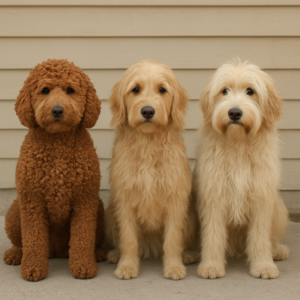
A Goldendoodle’s coat is the single best clue to how much you’ll be vacuuming. Because they are a mix of a curly-haired Poodle and a straight-haired Golden Retriever, their coats can land anywhere on that spectrum. The three main Goldendoodle coat types—curly, wavy, and straight—are the key to matching a dog to your lifestyle and expectations.
The curliest coat takes after the Poodle parent and is the best choice for minimizing shed. These tight ringlets are fantastic at trapping loose hair before it ever hits your floor. The trade-off, however, is significant grooming. All that trapped hair must be brushed out daily to prevent it from tangling into tight, painful mats close to the skin.
On the other end of the spectrum is the straight coat, sometimes called an “improper coat.” This look is much closer to a Golden Retriever’s shaggy fur, and unfortunately, it sheds like one, too. While this coat is the easiest to maintain with a quick brushing every few days, it is not a good fit for homes concerned with dog hair or mild allergies.
Most people picture the wavy coat when they think of a Goldendoodle. This popular “teddy bear” look is the happy medium, offering a lower-shedding alternative to the straight coat without the intense daily grooming required by a curly one. Knowing the coat types is your first step, but the next is predicting a puppy’s adult coat, which often comes down to a breeder’s secret code: F1 versus F1B.
The Breeder’s Secret Code: What F1 vs. F1B Means for Your Sofa
When you start talking to breeders, you’ll likely hear terms like “F1” and “F1B.” This isn’t just confusing jargon; it’s a simple recipe that tells you about a puppy’s parents and helps predict its adult coat. An F1 Goldendoodle is a first-generation mix—the direct offspring of a purebred Golden Retriever and a purebred Poodle. Because it’s a 50/50 split, the puppy’s coat is a complete genetic lottery. You might get a low-shedding wavy coat, or you could end up with a straighter coat that sheds significantly more.
To create more predictable, low-shedding dogs, breeders often use the F1B generation. An F1B Goldendoodle is created by breeding an F1 Goldendoodle back to a purebred Poodle. This “B” stands for “backcross,” and it tilts the genetic scales heavily in the Poodle’s favor. The resulting puppy is approximately 75% Poodle and 25% Golden Retriever, which dramatically increases the odds of it inheriting that desirable curly, minimally-shedding coat.
For anyone worried about finding dog hair on their dark clothes, the choice becomes much clearer. This breeder’s code empowers you to find the right puppy. Here’s the simple breakdown:
- F1 = 50% Poodle + 50% Golden Retriever (The Genetic Lottery)
- F1B = 75% Poodle + 25% Golden Retriever (The Safest Bet for Low Shedding)
If minimal shedding is your top priority, actively seeking out an F1B Goldendoodle is your best strategy. But even with the right genetics, there’s one more surprise in store: the great puppy coat switcheroo.
The Great Switcheroo: When Puppies Lose Their Baby Coat
That incredibly soft, fluffy fur on an 8-week-old Goldendoodle is one of their most charming features. But just like baby teeth, that puppy coat isn’t meant to last forever. Many new owners are surprised when, several months down the line, their minimally-shedding puppy suddenly starts leaving more hair around the house. This isn’t a cause for concern; it’s a completely normal and temporary phase known as the puppy coat transition.
This changeover typically begins sometime between 6 and 12 months of age. During this period, your Goldendoodle’s permanent adult coat starts to grow in, pushing out the finer puppy fur. You’ll likely notice more shedding than you expected as this old coat makes way for the new one. The texture can change as well—wavy coats might become curlier, and the soft fur may become a bit more coarse. It’s a slow-motion transformation that can last for several months.
You can’t accurately predict a dog’s lifelong shedding level based on its coat at 8 weeks old. While choosing an F1B puppy gives you better odds, the true nature of its adult coat remains a bit of a mystery until after this transition. The puppy that seems the fluffiest in the litter might not end up being the curliest as an adult. However, genetics still provide clues. Beyond the F-generation, there’s another visual cue you can look for right from the start, and it has everything to do with the puppy’s face.
Furnished vs. Unfurnished: The #1 Visual Clue to a Low-Shedding Doodle
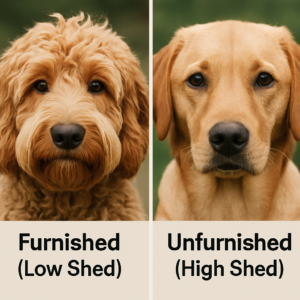
Beyond the F-generation, the most reliable sign of a low-shedding puppy is something you can see from day one: its facial hair. Breeders call this key trait “furnishings.” These are the distinct, longer hairs that form the shaggy eyebrows, mustache, and beard, creating that classic “teddy bear” face everyone associates with a Goldendoodle. A puppy with strong furnishings won’t have a sleek, short-haired muzzle; instead, its whole face will look scruffy and full. This is the single best visual clue for a low-shedding coat.
This scruffy face is so important because the gene that creates furnishings is directly linked to the gene for a low-shedding, Poodle-like coat. You can think of them as a genetic package deal. When a puppy inherits the trait for that fluffy face, it almost always inherits the trait for a body coat that sheds very little hair. Spotting these furnishings is therefore one of the most powerful and immediate tools you have for predicting how much your dog will shed as an adult.
The opposite of this is a puppy called “unfurnished” or one with an “improper coat.” These puppies look strikingly different, with a smooth, open-faced muzzle that strongly resembles a Golden Retriever’s. While genetically still a Goldendoodle, an unfurnished puppy has inherited the high-shedding coat from its Retriever side. An unfurnished vs furnished Goldendoodle is a night-and-day difference, as the unfurnished dog will be a heavy shedder. This distinction is crucial, especially for families worried about allergies—though low-shedding isn’t the whole story there, either.
The “Hypoallergenic” Myth: Why Low-Shedding Isn’t Allergy-Proof
That final point about allergies is critical, because “hypoallergenic” is perhaps the most misunderstood term in the dog world. People aren’t typically allergic to dog hair; the real culprits are microscopic skin flakes (dander) and proteins in a dog’s saliva. The hair simply acts as a vehicle, carrying these allergens from the dog into your home, onto your furniture, and into the air. For this reason, no dog breed, Goldendoodles included, is ever 100% allergy-proof.
This is where a low-shedding coat makes such a huge difference for allergy sufferers. A Goldendoodle with a curly, furnished coat sheds very little, meaning fewer of those dander-covered hairs escape into your environment. The tight curls act like a trap, holding onto allergens until they are brushed out. A high-shedding dog, in contrast, constantly releases these particles around your home. So while a low-shedding coat doesn’t eliminate the source of the allergens, it dramatically reduces how much of it you’re exposed to daily.
If allergies are a primary concern for your family, the only real test is exposure. Before you commit to a puppy, it is essential to spend significant time around an adult Goldendoodle, preferably one with a similar low-shedding coat. Visit the breeder and interact with the puppy’s parents, or ask a friend with a Doodle if you can spend an afternoon at their home. This will give you the most accurate idea of how your body will react. Even with the perfect puppy, managing allergens is an ongoing process, and keeping their coat clean is your best line of defense.
Your Grooming Toolkit: How to Drastically Reduce Shedding at Home
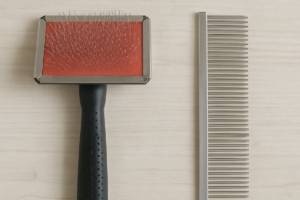
A low-shedding coat works by trapping loose hair, and your job is to get that hair out before it forms painful mats or escapes onto your furniture. Your secret weapon is a consistent grooming routine built around a few essential tools. Forgetting the dozens of confusing options at the pet store, you truly only need two or three key items to keep your Doodle’s coat healthy and your home clean. This simple setup is the best brush combination for a Goldendoodle puppy or adult.
Your essential toolkit is surprisingly simple. Investing in quality versions of these will save you time, money, and stress in the long run.
- Slicker Brush: This is your daily workhorse. A good slicker brush has fine, bent wire bristles that gently remove loose undercoat and surface tangles.
- Metal “Greyhound” Comb: This is your quality control tool. After using the slicker, you run this comb through the coat all the way to the skin. If it glides through smoothly, the area is free of tangles.
- Dematting Rake (Optional): This is for emergencies only. If you find a stubborn mat the other tools can’t handle, this can help break it apart.
For wavy or curly coats, a quick daily brushing session is non-negotiable. The trick is to work in small sections, using the slicker first and then following up with the comb. Every single hair you pull out into that brush is one less you’ll have to vacuum up from the floor or pull off your black pants. This consistent routine is the single most effective way to reduce Goldendoodle shedding. However, proper grooming is just one piece of the puzzle, as sometimes an increase in shedding can signal other issues.
Beyond the Coat: Other Reasons Your Goldendoodle Might Be Shedding
Even with a perfect grooming routine, you might notice more loose hair a couple of times a year. This is often just seasonal shedding. As seasons change, your dog’s body naturally releases its old coat to prepare for the coming weather. Even low-shedding Goldendoodles can experience this “coat blow,” typically in the spring and fall. Consistent brushing is the best way of managing seasonal shedding in dogs, helping you remove the dead hair before it has a chance to cover your couch. This phase is temporary and a completely normal part of dog ownership.
Beyond the seasons, a dog’s emotional state can also trigger hair loss. Dogs, like people, can shed more when stressed. A big move, a new family member, or even loud thunderstorms can cause a temporary increase in shedding. If you’re wondering why is my goldendoodle puppy shedding so much after you just brought it home, the stress of a new environment is a very likely culprit. This type of shedding usually subsides as your dog settles in and feels secure, so a little patience goes a long way.
A dog’s coat is also a direct reflection of their internal health. A quality goldendoodle diet, rich in nutrients like omega fatty acids, provides the building blocks for strong, healthy hair that’s less prone to breakage and loss. If you ever notice a sudden, dramatic increase in shedding, especially if it’s accompanied by bald patches or skin irritation, it’s time to check in with your vet. They can rule out any underlying health issues. While you can manage these factors, ensuring a low-shedding companion starts with choosing the right puppy—which means knowing exactly what to ask a breeder.
A Breeder Checklist: 7 Questions to Ask to Find Your Low-Shed Puppy
Walking into a conversation with a breeder can feel overwhelming, but being prepared turns it into an interview where you are in charge. Use this checklist to gauge a breeder’s knowledge and find the right puppy for your home. Their answers are the best tool for finding a Goldendoodle that fits your low-shedding lifestyle.
Here are the crucial questions to ask a Goldendoodle breeder:
- Is this puppy an F1, F1B, or Multigen?
- Is the puppy furnished? Can you show me the furnishings on its face?
- Can I see the mother and (if possible) the father to feel their coats?
- Have you performed genetic testing for coat traits (like furnishings and curl)?
- How would you describe this puppy’s coat type right now?
- What kind of shedding do you expect from this puppy as an adult?
- What do previous puppy buyers say about their dogs’ shedding?
A reputable breeder will welcome this conversation. They should be able to answer confidently, show you health and genetic testing results, and set realistic expectations. They will avoid absolute terms like “guaranteed non-shedding.” If a breeder gets defensive, dismisses your questions, or seems vague, that’s a clear sign to walk away. Finding an honest, experienced breeder is the single most important step in identifying the signs of a low-shedding puppy and ensuring you bring home a happy, healthy companion.
Your Roadmap to a Happier, Lower-Shed Life with a Goldendoodle
While no Goldendoodle is truly “no-shed,” you can make an educated choice to find a companion that fits your low-shedding lifestyle. The key is to look beyond marketing claims and understand the genetic and practical realities that shape a Goldendoodle’s coat.
For the most predictable outcome, your surest path is choosing an F1B puppy that has a visibly furnished and curly coat. Remember that the soft puppy coat is temporary, so always ask the breeder about the parents’ coats to get a better preview of the future. This knowledge empowers you to have confident, transparent conversations with breeders, ensuring you partner with someone who values the health and integrity of their dogs.
Beyond genetics, your role is crucial. Bringing home a Goldendoodle means committing to consistent grooming. Daily brushing is your most powerful tool for managing shedding and preventing painful mats, regardless of your dog’s coat type. By combining a smart puppy choice with a dedicated grooming routine, you can come as close as possible to a shed-free life, ensuring a future filled with love and much less vacuuming.


