 Skip to content
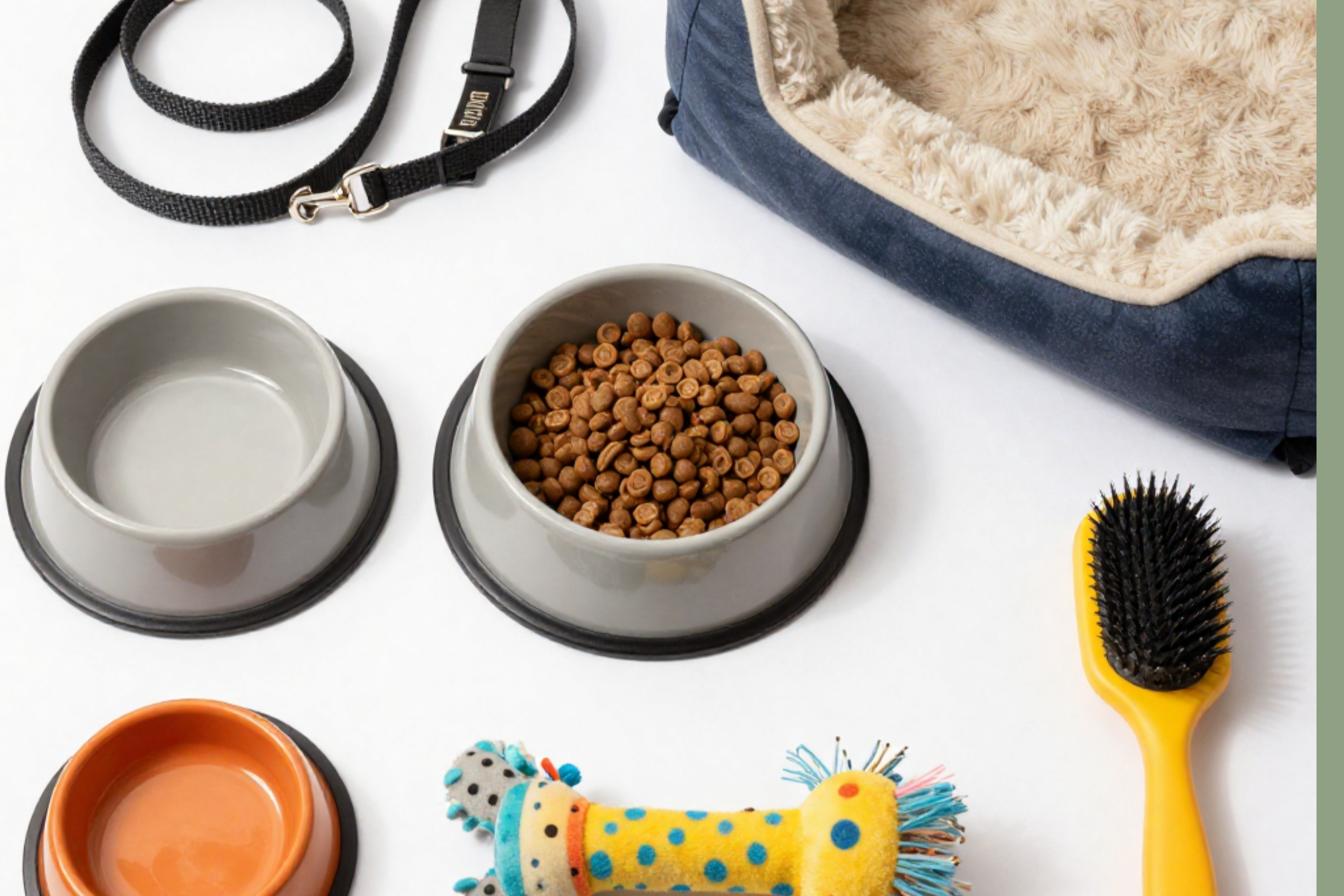
So, you’re bringing home a Goldendoodle! Amid all the excitement, it’s easy to feel overwhelmed by the pet store aisles. Forget the stress—this is your simple, no-fuss checklist for a successful homecoming. We’ll start with the single most important item in your puppy training starter pack, and one that causes the most confusion: the crate.
Let’s clear this up first: a crate is not a “cage” or a place for punishment. Experienced Doodle owners and trainers agree that when introduced properly, a crate becomes your dog’s personal den—a safe, cozy bedroom they can retreat to. It’s an essential management tool that gives you peace of mind knowing your puppy is safe from chewing electrical cords or swallowing something they shouldn’t when you need to take a shower or cook dinner. This positive association is the foundation for successful crate training a Goldendoodle.
Now for the big question: what size crate for a standard Goldendoodle? Here’s the money-saving rule: buy a crate that will fit your Doodle when they are fully grown, but make sure it comes with a divider. For most standard Goldendoodles, a 42-inch crate is the perfect size. While they are a puppy, you’ll use the divider to shrink the space down so they only have enough room to stand up and turn around. This is the key to faster potty training, as a puppy’s natural instinct is to avoid soiling their immediate sleeping area.
By using a crate correctly from day one, you’re providing your new puppy with structure and security. The benefits are immediate and long-lasting for both of you.
- A safe space when you can’t supervise them.
- A powerful potty training aid that prevents accidents.
- A cozy, personal den for rest and relaxation.
Harness vs. Collar: The Best Way to Walk Your Bouncy Doodle
While a collar is essential for holding ID tags, it’s not the best tool for walking an exuberant Goldendoodle puppy. These dogs are bundles of joyful energy, and in their excitement to explore the world, they often pull hard on the leash. When attached to a collar, all that pulling force concentrates directly on their throat. This is more than just uncomfortable; it can put risky pressure on their delicate windpipe (trachea), which is something veterinarians caution against, especially for young, growing dogs. For safer, more enjoyable walks from day one, a harness is the clear winner.
The right harness does more than just move the pressure off the neck—it can actively help you teach your dog to walk politely. We specifically recommend a front-clip harness, where the leash attaches to a ring on your dog’s chest. This small detail makes a huge difference. Unlike harnesses that clip on the back (which can inadvertently teach a dog to pull harder, like a little sled dog), a front-clip design gives you gentle control.
Here’s how it works: when your Doodle starts to pull ahead, the pressure on their chest gently guides them to turn back toward you. It’s a natural, self-correcting motion that discourages pulling without any yanking or choking. Professional trainers love this method because it turns every walk into a subtle training session, helping your puppy learn that the best way to move forward is to stay by your side. Choosing a front-clip harness is one of the easiest ways to set you and your new best friend up for years of pleasant, pull-free walks.
The Unskippable Duo: How to Prevent Painful Matting in a Goldendoodle’s Coat
That beautiful, fluffy coat is probably one of the reasons you fell in love with the Goldendoodle, but it comes with a non-negotiable job: daily brushing. Without it, their soft fur will develop mats—tight, painful knots of tangled hair that pull on the skin. Many new owners are surprised to learn that a quick pass with a single brush isn’t enough to prevent them. To truly keep your Doodle comfortable and avoid stressful, expensive trips to the groomer for a full shave-down, you need to follow the “two-brush rule.”
Think of it as a simple, two-step system. These are the only at-home grooming tools for your Goldendoodle that you’ll need to master how to prevent matting in their coat, and they work as a team.
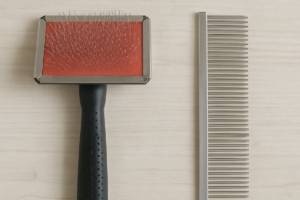
- The Slicker Brush (The Daily Workhorse): Your first tool is a slicker brush. This is a wide paddle brush with fine, bent wire bristles. Its job is to go over the entire coat, removing loose fur and breaking up any surface-level tangles. This is your initial, all-over pass that makes the coat look fluffy and clean.
- The Metal Comb (The Mat Detector): Your second, and most critical, tool is a sturdy metal comb, often called a “greyhound comb.” This is your secret weapon. After you’ve used the slicker brush on a section of fur, you must perform the “comb check.”
Here’s the method that professional groomers swear by: slide the metal comb all the way through the fur, making sure the teeth touch your dog’s skin. If the comb glides through smoothly from root to tip, that area is officially tangle-free. If it gets stuck, you’ve found a hidden knot that the slicker brush missed. You can then use the end tooth of the comb to gently pick the tangle apart. This “comb check” is the only way to be certain you’ve removed the small knots that grow into painful mats over time.
Making this process a part of your daily routine is the key to success. Just ten minutes of brushing with the slicker and confirming your work with the comb each day will keep your Doodle’s coat healthy, prevent pain, and make professional grooming appointments a breeze. It’s an investment of time that pays off in your dog’s comfort, just as providing them with safe outlets for their natural chewing instincts will pay off in protecting your furniture.
Redirecting the Teething Terror: Why Your Puppy Needs a ‘Chew Toy Wardrobe’
That new puppy energy is wonderful, but it often comes with a very sharp downside: teeth marks on everything you own. Before you get frustrated with your little land shark, it’s important to understand that puppies chew for a reason. Just like human babies, they explore the world with their mouths and need to soothe their sore gums during teething. The goal isn’t to stop the chewing—it’s to teach them what they are allowed to chew on. This is where a good collection of durable chew toys becomes your best defense for saving your shoes and furniture.
Simply giving your Goldendoodle one lonely toy won’t be enough to hold their interest. To successfully redirect their chewing, you need to provide a “chew toy wardrobe” with a variety of textures and challenges. A smart puppy will quickly get bored with the same old thing, so having a rotation of toys made from different materials—like hard nylon, bouncy rubber, and softer plastics—will keep them engaged with their own belongings instead of yours. When you see your puppy start to gnaw on the leg of a chair, don’t scold them; instead, calmly interrupt and offer one of their exciting toys.
One of the most valuable items in this wardrobe will be a classic stuffable rubber toy, like a KONG. These are fantastic because they serve two purposes. First, they are durable chew toys for teething puppies that can withstand a lot of gnawing. Second, you can fill them with puppy-safe goodies like peanut butter, plain yogurt, or their own kibble soaked in water. For an extra challenge and to help with separation anxiety, pop a stuffed toy in the freezer for a few hours. A frozen treat provides a long-lasting activity and the cold helps soothe inflamed gums, making it a perfect tool for crate time or when you need a moment of peace.
By providing these approved outlets, you’re not just distracting your puppy; you’re teaching them a vital lesson in an encouraging way. You’re showing them how to make good choices and satisfying a biological need at the same time. This idea of keeping their intelligent minds busy is a cornerstone of raising a happy Goldendoodle, and it extends beyond simple chewing. In fact, using engaging toys is just the beginning of providing the mental exercise they crave.
More Than a Meal: Why Smart Doodles Need Puzzle Toys
That Poodle brain in your Goldendoodle means they need more than just a good run in the park to feel truly satisfied. A long walk tires out their legs, but it doesn’t always tire out their mind. This is where mental enrichment—giving your dog a job or a puzzle to solve—becomes essential. Without this kind of stimulation, an intelligent dog will often invent their own games, like seeing what’s inside your couch cushions. Providing enrichment puzzles for intelligent dogs is one of the best ways to prevent this boredom-based misbehavior.
The great news is that working their brain is easier than it sounds, and you can start by making mealtime more engaging. Instead of just putting their food in a bowl, you can turn it into a fun challenge with a couple of simple tools. This is a perfect addition to your Goldendoodle puppy checklist.
- A Snuffle Mat: This is a fabric mat with lots of fleece strips. Simply sprinkle your dog’s dry food into the mat and let them use their powerful sense of smell to “hunt” for their meal. It satisfies their natural instincts and turns a two-minute feeding into a 15-minute brain game.
- A Level 1 Puzzle Toy: These are beginner-friendly toys that require your puppy to slide panels or lift flaps to find hidden treats. It’s a fantastic way to teach them problem-solving skills.
By adding these activities to your routine, you’re doing more than just feeding them. You are building their confidence, reducing anxiety, and tiring them out in a profound way—a 15-minute puzzle session can be as exhausting as a 30-minute walk. A mentally satisfied dog is a calmer and happier dog, which is a huge advantage as you begin to tackle the next big milestone: house training.
Your House-Training Survival Kit: The Essentials for a Clean Floor
Let’s be realistic: accidents are going to happen with your new puppy. But the secret to successful house training isn’t just cleaning them up; it’s about making sure your puppy doesn’t return to the scene of the crime. When you use regular soap on a urine spot, you only remove the stain for your human nose. Your Doodle’s powerful sense of smell can still easily detect leftover odors, which acts like a giant, invisible sign that says, “This is a great bathroom spot!” This is why so many puppies have repeat accidents in the same area, no matter how much you scrub.
To truly eliminate that signal, you need a specific tool from your puppy training starter pack: an enzymatic cleaner. Instead of just masking the smell, this type of cleaner uses natural proteins (enzymes) to physically break down and destroy the odor-causing molecules in dog urine. Think of it as a microscopic cleanup crew that eats the mess, leaving nothing behind for your puppy to smell later. Having a bottle of enzymatic cleaner for dog urine on hand isn’t just a suggestion; it’s a non-negotiable item that prevents the cycle of repeat accidents and saves your floors and your sanity.
While the cleaner helps you manage mistakes, the other half of house training is enthusiastically rewarding success. This is where high-value training treats come in. These aren’t your average dog biscuits. A high-value treat is something extra special and extra smelly—like tiny pieces of freeze-dried chicken or a soft, chewy training morsel—that your puppy only gets the moment they finish going potty outside. This powerful reward makes a huge impression, teaching your smart Goldendoodle that doing their business in the yard is the most amazing, celebrated thing they can do all day.
Putting It All Together: Your Goldendoodle Go-Kit Checklist
You’ve gone from wondering what a new Goldendoodle needs to understanding exactly why each item matters. Instead of facing a wall of confusing options at the pet store, you now have a clear, targeted plan. You know that a metal comb is your secret weapon against mats, a front-clip harness makes walks more pleasant, and a crate is a tool for safety and comfort, not punishment. You are no longer just an aspiring owner; you are a prepared one.
Your next step is simple: use this final new Goldendoodle puppy checklist to gather your supplies. With this curated list of Goldendoodle must-haves, you can shop with confidence, knowing you’re getting all the essential supplies for bringing a new puppy home.
Your Complete Goldendoodle Checklist
- Home & Safety: Crate with a divider, stainless steel food and water bowls.
- Walking & Outings: Front-clip harness, 6-foot leash, poop bags.
- Grooming: Slicker brush and a metal “greyhound” comb.
- Play & Training: Durable chew toys (like a KONG), a puzzle toy or snuffle mat, and high-value training treats.
- Cleanup: Enzymatic cleaner for accidents.
As you check these items off your list, remember that you’re doing more than just shopping. You are building a safe, happy, and healthy environment for your new best friend. This preparation is your first, most important act as a wonderful dog owner. You’ve got this.


