 Skip to content
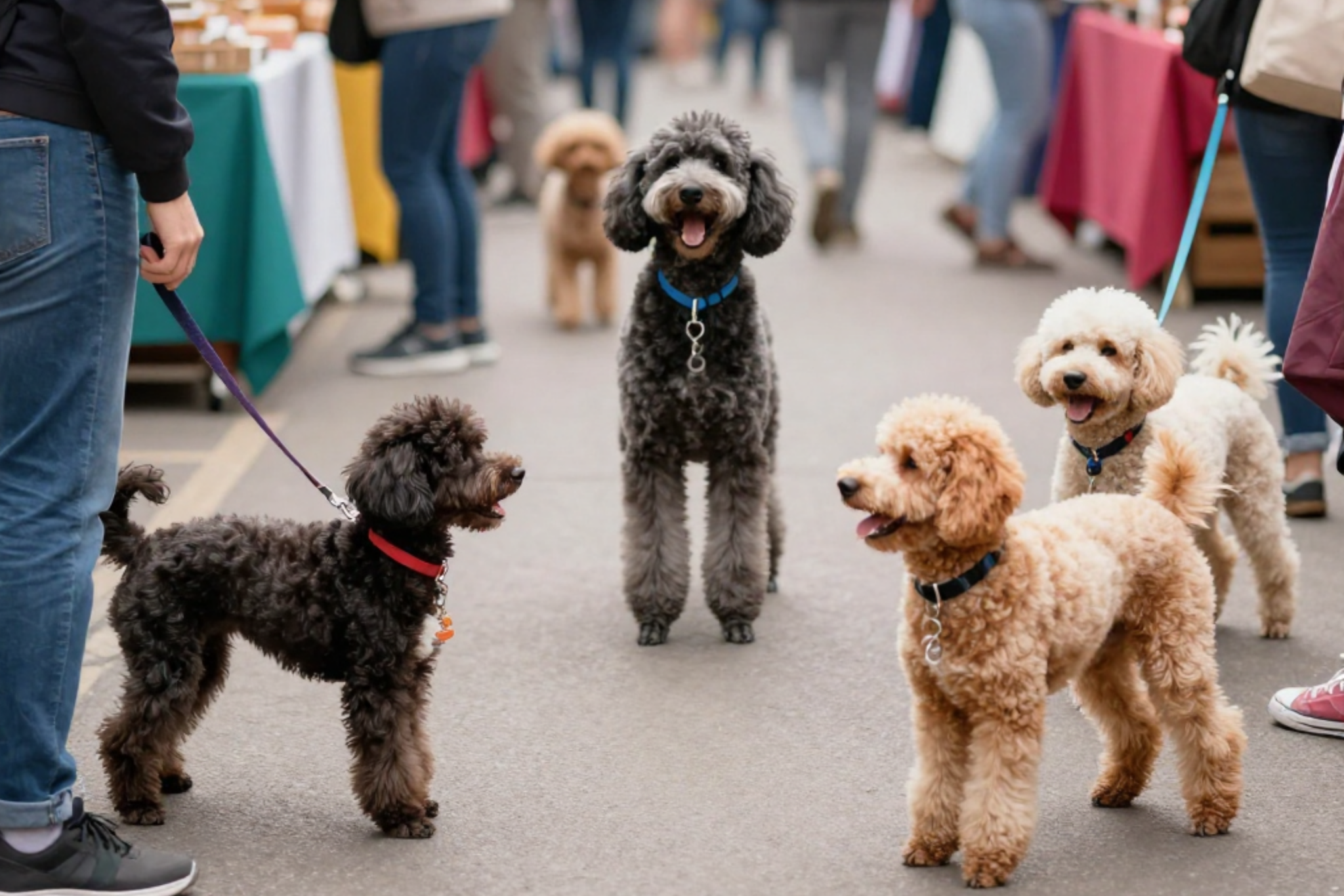
Imagine bringing home a new dog that already knows not to jump on guests, chew the furniture, or have accidents on the rug. This is the incredible promise behind listings for trained doodles for sale—the chance to get a perfect companion and skip the puppy training phase entirely. For busy families and first-time owners, the appeal is easy to understand.
But what does “trained” actually mean? In practice, that word is a powerful and unregulated marketing tool. It can describe a dog with hundreds of hours of professional work or a puppy that simply learned to use a potty pad once. This lack of an industry standard creates a confusing market where the price tag often doesn’t match the reality.
The difference can cost you thousands of dollars and immense frustration. Believing you are investing in a “finished” dog, only to discover you still have months of foundational work ahead, is a common and heartbreaking experience. To make a confident choice, you need to see past the marketing and find a genuinely well-behaved companion for your family.
What Does “Trained” Actually Mean? The 4 Levels You Need to Know
When you see a doodle advertised as “trained,” it’s essential to understand that this term isn’t regulated. Most “trained doodles for sale” fall into one of four categories, each with a very different price tag and level of responsibility for you as the new owner. Think of it as a spectrum: on one end you have a puppy with a slight head start, and on the other, a dog ready for public life.
- Started Puppy: This is the most basic level. The puppy has likely been introduced to a crate and may have begun potty pad training. This is a minimal head start; you will still be responsible for about 95% of the house-training and all obedience work.
- House-Trained & Crate-Trained: A significant step up, this dog reliably eliminates outside and is comfortable resting in its crate. This solves the most immediate and messy challenges of a new dog.
- Basic Obedience Trained: This is a well-mannered family pet. The dog knows essential commands like “Sit,” “Stay,” “Come,” and how to walk politely on a leash without pulling.
- Advanced/Public Access Trained: This is the highest level of training, often involving a dog with advanced obedience skills ready for calm outings to dog-friendly public spaces. They may have passed a standardized test like the AKC’s Canine Good Citizen (CGC), which certifies their good manners around people and other dogs.
The Truth About “Started Puppies”: A Head Start or a Head Fake?
Of all the terms on the training spectrum, “started puppy” is the most easily misunderstood. A puppy in a “doodle started puppy program” has been gently introduced to foundational concepts, not mastered them. Think of it like a child who has learned the alphabet song but can’t yet read a book. The breeder has likely let the puppy spend time in a crate and established a potty area, giving it a tiny head start on the idea of a “clean” den.
It’s crucial, however, to understand what a started puppy is not. This puppy is not house-trained and will have accidents. It does not know how to walk on a leash, and it hasn’t learned commands like “Sit” or “Stay.” You are still bringing home a brand-new puppy with all the typical responsibilities, from round-the-clock supervision to months of consistent training. The difference between a truly trained doodle and an untrained one is vast, and a started puppy still falls squarely in the untrained camp.
So, is paying extra for a started puppy worth it? The small advantage it provides can reduce a little stress during the first few nights, but it doesn’t bypass the hard work ahead. You must weigh the breeder’s extra fee against this minimal benefit. For many busy families, the real game-changer isn’t a “started” puppy, but one that has already conquered house-training.
Why a Housebroken Doodle is a Game-Changer for Busy Families
After hearing about the work involved with a “started” puppy, the idea of a fully housebroken dog sounds like a dream. A genuinely housebroken doodle puppy has been taught that pottying happens only outside. It understands how to hold it for a reasonable amount of time and often learns to signal when it needs to go out. This single skill eliminates the most stressful and time-consuming part of raising a puppy from scratch.
For a busy family, the benefits are immediate and profound. You can effectively skip the phase that involves stained carpets, constant crate rotations, and bleary-eyed, middle-of-the-night potty breaks. Instead of your first few months being defined by frustration and cleaning supplies, you gain priceless peace of mind. This transforms the entire experience of bringing a new dog home.
Beyond just keeping your floors clean, this foundational training allows you to focus on what really matters: building a joyful bond with your new companion. Your energy can be spent on fun walks and positive training games, rather than constantly correcting potty mistakes. When you’re not playing “accident detective,” your relationship starts on a foundation of trust and enjoyment from day one.

What “Basic Obedience” Skills Are Non-Negotiable?
While house-training solves problems inside the home, basic obedience is what makes your dog a safe and welcome companion out in the world. These commands are the shared language you use to prevent accidents and manage daily situations with confidence. A seller’s claim of “basic obedience” should always include proof that the dog has mastered five core skills:
- Sit/Stay: Essential for polite greetings (no jumping!) and impulse control at doorways.
- Come: The single most important command for your dog’s safety if they ever get loose.
- Down: A crucial skill for helping an energetic doodle settle calmly, especially around guests or children.
- Leave It: A life-saving cue that stops your dog from eating dropped pills, toxic foods, or street trash.
- Loose-Leash Walking: Transforms dreaded, arm-yanking walks into relaxing, enjoyable strolls.
When evaluating a dog, don’t just take the breeder’s word for it—ask for a demonstration. A truly trained dog can perform these cues without hesitation, even with minor distractions. While a doodle with Canine Good Citizen certification represents a higher standard, these five skills are the absolute minimum. This level of reliability requires hundreds of hours of expert work, which directly influences the price.
How Much Does a Trained Doodle Cost (and Is It Worth It)?
The price tag for a trained doodle can be surprising, often ranging from a few thousand dollars above the puppy’s price to well over $25,000. This isn’t just an inflated fee; you are investing in hundreds of hours of a professional’s dedicated time, expertise, and the 24/7 board-and-train care required to raise a stable, well-mannered dog. The cost is a direct reflection of the skill and consistency built into the dog’s behavior.
That price directly corresponds to the level of training provided. A “started” puppy will be at the lower end of that range. However, a dog with reliable basic obedience skills often costs $10,000 to $15,000+. A fully trained Goldendoodle puppy ready for calm public outings represents the highest investment, a price that accounts for months of intensive work with an expert.
To decide if pre-trained puppies are worth it, consider the alternative. How much would you spend on group classes, private training sessions, and replacing chewed-up shoes over the first year? More importantly, what is the value of your own time and peace of mind? You are paying a premium to bypass the most chaotic stages of raising a puppy. For busy families who prioritize a predictable companion from day one, the investment is often justified.
The 7 Essential Questions to Ask a Trained Doodle Breeder
With such a significant investment on the line, asking specific questions is the best way to verify a breeder’s claims and ensure you’re getting what you pay for. Use this checklist as your guide during every conversation.
- What specific commands does the dog know, and can you show me a video?
- What training methods do you use (e.g., positive reinforcement)?
- What kind of socialization has the dog had?
- What is the dog’s daily routine here?
- What health testing have the parents had?
- What support do you offer after the dog goes home?
- Can I meet the puppy (and ideally its mother) in person or via live video call?
The quality of the answers is just as important as the questions themselves. Vague responses are a warning sign. For training methods, listen for “positive reinforcement,” which builds a confident dog by rewarding good behavior, not punishing bad behavior. For socialization, a great breeder will offer a detailed list of experiences—like exposure to car rides and vacuum cleaners—not just a generic “they’ve been socialized.” Always insist on seeing recent video proof and confirm what support they offer after you take your puppy home.
3 Red Flags That Scream “Scam” or “Poorly Trained”
A seller’s behavior can tell you everything. The biggest red flag is a lack of transparency. If a breeder gives vague descriptions of training, can’t provide clear video evidence, or won’t discuss the parents’ health testing, they are likely hiding a low-quality operation. A reputable seller who has put hundreds of hours into a dog is proud to show it off; evasiveness suggests the training doesn’t live up to the advertisement.
Another major warning sign is any pressure to make a quick decision. Scammers and low-quality breeders thrive on impulse buys. They might tell you other families are interested or that the price is a “one-day-only” special to stop you from doing your research. A professional who has invested in a well-trained dog will give you the time and space to ensure it’s the right fit.
Finally, trust your gut. If a seller refuses a live video call or makes excuses for why you can’t see where the puppy is raised, something is wrong. They may be concealing poor living conditions typical of a puppy mill. Encountering any of these red flags is your cue to walk away. No matter how cute the puppy is, a bad beginning rarely leads to a happy ending.
Your Job Begins at “Go Home”: How to Maintain Your Dog’s Training
Think of a trained doodle like a high-performance car. The breeder built an incredible machine, but you must use the right fuel (positive reinforcement) and follow the rules of the road (consistency) to keep it running smoothly. The work isn’t over; it’s just shifting to you.
Your first step in this transition is simple: ask the breeder for an “owner’s manual” detailing the dog’s specific commands, schedule, and routine. Following this guide for the first 30 days is the single most powerful action you can take to make the homecoming a success.
This consistency is how you honor the partnership. You’re not just maintaining dog training; you are building a bond. The well-behaved, joyful companion you dreamed of is waiting for you to take the lead.


